
Estate Planning for Families with Children
When children depend on you, clarity is protection.
Estate planning helps parents document who should care for their children, how decisions should be made, and how support should continue if life changes unexpectedly.
Published December 2025 • Updated June 2026
At a Glance
YOU ARE HERE:
Estate Planning Series → Phase 3 Article 3 of 7
Introduction: Estate Planning for Families with Children
The phone rings in the middle of the night.
There has been an accident.
You and your partner are unable to answer questions.
Your children are safe — for now — sitting with someone who cares about them but does not know what tomorrow looks like.
At some point, someone asks the question no parent ever wants to imagine:
“Who is supposed to take care of them if you can’t?”
Estate planning for families with children exists for that moment — not because you expect it, but because your children deserve stability when everything else feels uncertain.
Planning is not about assuming something will go wrong.
It is about making sure the people you trust have the guidance they need if they are ever asked to step in.
When Children Depend on You, Planning Becomes Protection
For parents, estate planning is not about assets first.
It is about continuity.
Children depend on adults for more than financial support. They depend on:
- daily care
- routines
- emotional stability
- important decisions
- long-term guidance
When that structure is suddenly interrupted by illness, injury, or loss, uncertainty can make an already difficult situation harder.
Without clear plans:
- guardianship questions may arise
- financial responsibilities may become unclear
- family members may disagree about next steps
- temporary decisions may need to be made quickly
Thoughtful planning gives loved ones a roadmap before they are asked to make difficult choices.
Guardianship Is About Who Steps In — Not Who Gets Chosen Later
Many parents assume:
“My family knows what I would want.”
Sometimes they do.
Sometimes different people remember different conversations.
Choosing a guardian allows parents to document who they trust to provide:
- daily care
- stability
- guidance
- family values
- emotional support
A guardian is not just the person who loves your children.
It is the person you believe is best prepared to step into a parenting role if needed.
Without documented wishes, decisions may need to be made through legal processes at a time when everyone is already dealing with loss or uncertainty.
Guardianship planning is an act of protection, not pessimism.
FREE DOWNLOAD
📘 Family Protection Toolkit
Choosing guardians and documenting wishes can feel overwhelming.
The Family Protection Toolkit helps parents think through guardianship decisions, emergency planning, and important information loved ones may need if they are ever asked to step in.
View resource →
⚖️ Real-Life Planning Scenario
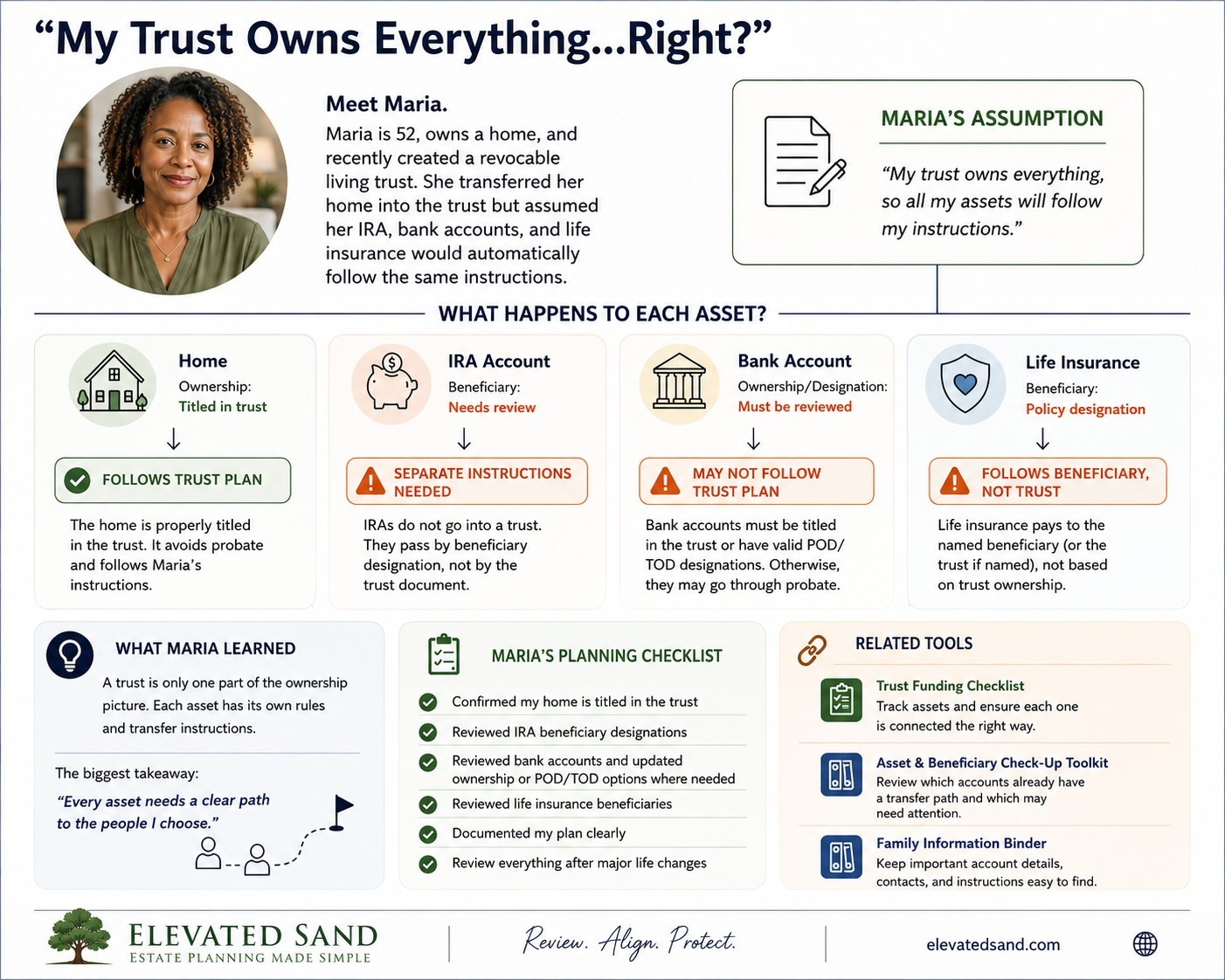
The Emotional Reality Parents Don’t Talk About
Choosing guardians can bring up difficult questions:
- Who shares our values?
- Who can provide consistency?
- Who has the capacity to take on this responsibility?
- Who can make difficult decisions when needed?
Many parents delay these choices because they feel uncomfortable.
They worry about hurting feelings, making the wrong choice, or changing their mind later.
But avoiding the decision does not remove the responsibility.
It simply leaves others trying to answer those questions without your guidance.
Financial Stability Is Part of Care — But It Requires Boundaries
Children do not just need someone to care for them.
They may also need someone to responsibly manage resources intended for their future.
Financial planning helps clarify:
- who manages assets
- how money should be used
- when children receive access
- what safeguards should exist
The person who provides daily care does not always have to be the same person managing finances.
Separating responsibilities is not about distrust.
It is about matching each role with the person best prepared to handle it.
Why Unclear Plans Create Crisis-Within-a-Crisis
Family emergencies are already emotional.
When plans are unclear:
- loved ones may disagree about next steps
- children may experience additional uncertainty
- decisions may happen quickly instead of thoughtfully
- temporary solutions may become complicated
Clear instructions cannot remove grief.
But they can give families direction when they need it most.
Estate Planning Grows With Your Children
The plan you create when your children are young may not be the same plan they need years later.
Life changes.
Children grow.
Relationships evolve.
Your planning may need updates as children move through different stages:
- young children needing guardians
- teenagers gaining independence
- adult children managing their own responsibilities
- children with unique needs or circumstances
Estate planning for families is not a one-time decision.
It is an ongoing commitment to keeping your support system aligned with your family’s life.
Final Thought
Planning for children is not about expecting the worst.
It is about reducing uncertainty if the unexpected happens.
Clear guardianship decisions, organized information, and thoughtful financial planning help ensure your children are surrounded by guidance and support.
The most meaningful gift parents can leave is not only resources.
It is clarity, stability, and a plan created with love.
Next Up: Blended Families and Estate Planning Challenges
When families include remarriage, stepchildren, shared responsibilities, or complex relationships, planning becomes even more important.
Next, we’ll explore how blended family dynamics can affect inheritance, authority, and family expectations.
🔍 External Resources & Related Articles
The resources below offer additional perspective and support for navigating complex decisions around authority, family dynamics, and real-world preparedness. These materials are intended to help you think clearly and confidently as you plan.
📚 Trusted External Guidance
These organizations provide clear, reputable information related to financial authority, medical decision-making, family protection, and planning during incapacity. Their materials are designed to support understanding and preparation—not to replace professional advice.
🌐 Consumer Financial Protection Bureau (CFPB) — Managing Someone Else’s Money
🌐 National Institute on Aging (NIH) — Advance Care Planning=
🌐 Social Security Administration (SSA) — Disability & Benefits Overview
🌐 FINRED (.gov) — Family & Financial Preparedness
🌐 ElderLawAnswers — Disability, Long-Term Care & Family Planning
🌐 The Conversation Project — End-of-Life Communication
🌐 Fidelity — Estate Planning & Health Care Planning
🌐 Charles Schwab — Estate, Family & Incapacity Planning
NOTE: These links are provided for additional education and exploration.
🎯 Related Phase 3 Articles
These articles explore real-world estate planning decisions involving authority, family relationships, and protection during uncertainty. Each piece is designed to help you understand the considerations behind important choices before action is required.
📘 Durable Power of Attorney: Who Handles Finances if You Can’t
📘 Medical Power of Attorney & Living Will Explained
📘 Estate Planning for Families with Children
📘 Blended Families and Estate Planning Challenges
📘 Disability Trusts Explained (In Simple Terms)
📘 Avoiding Family Conflict: How to Talk About Estate Planning
📘 Keeping Your Estate Private: Wills, Trusts, and Confidentiality
Looking for more estate planning tools?
Explore the full collection on our Tools & Resources page.
About the Author: Tonya Harris
Tonya Harris is the founder of Elevated Sand. She creates culturally grounded financial, digital, and real-life education that helps people understand complex systems, make informed decisions, and build stronger foundations for the future.
JOIN THE COMMUNITY
Sign up & get updates
Join our community for practical insights, financial tips, and tools to help you grow, protect, and elevate your life — one step at a time.
Disclaimer: Information is for educational purposes only and should not be considered legal or financial advice. Estate planning involves complex legal and tax considerations. You should consult a qualified estate planning attorney to determine the best approach for your situation and ensure compliance with your state’s laws.