

Estate Planning Series / Phase 2
PHASE 2 · ARTICLE 6 OF 8
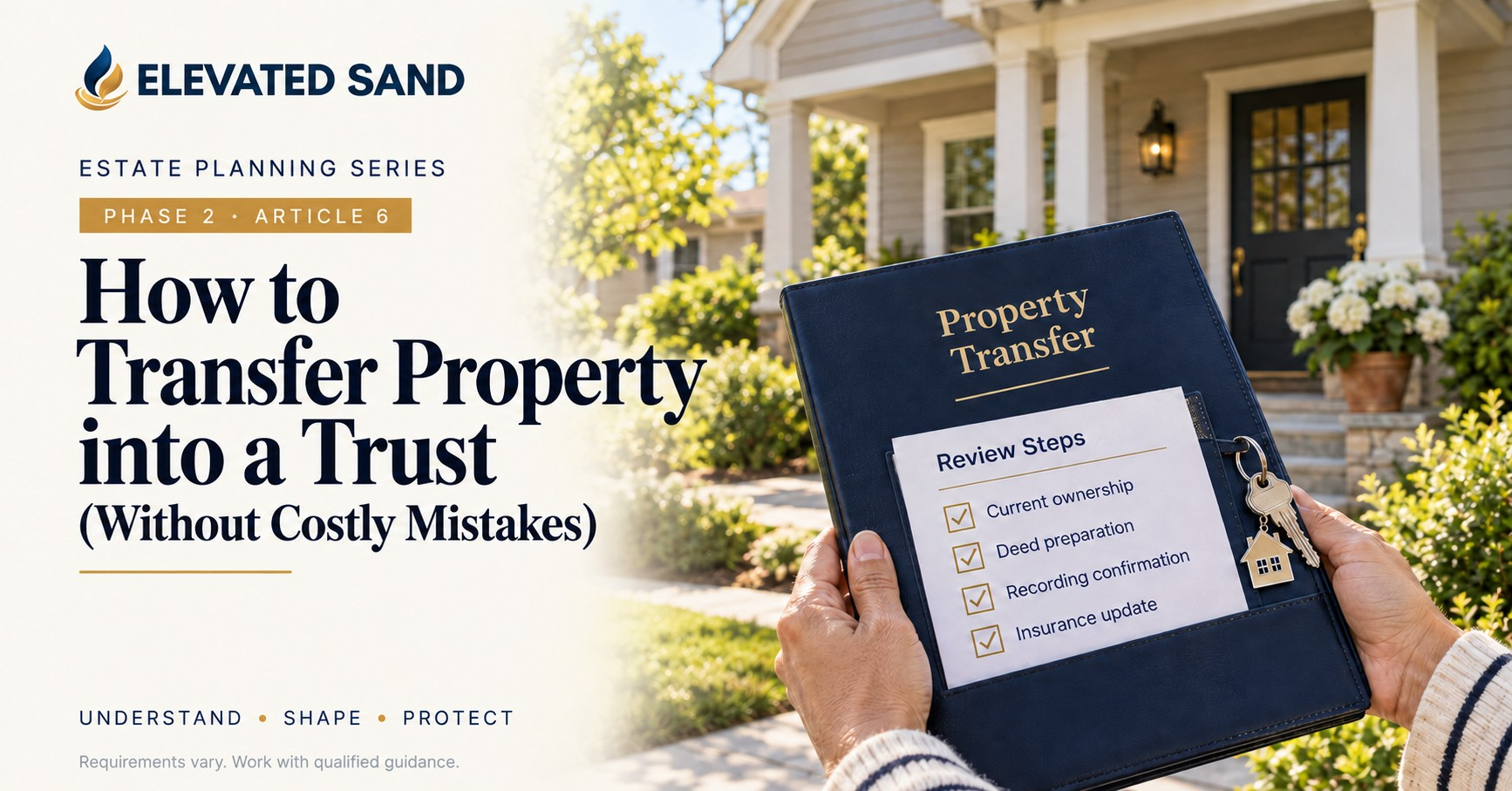
How to Transfer Property into a Trust Without Costly Mistakes
Learn how real estate transfers work, why the deed matters, and what steps help ensure your home is properly connected to your trust.
By Tonya Harris
5 minute read
Last updated November 7, 2026
Originally published December 2025
On This Page
- Introduction: Transfer Property into a Trust
- What Does It Mean to “Transfer Property into a Trust”?
- Why Property Transfers Matter So Much
- Real Estate Commonly Reviewed for Trust Ownership
- Assets That Should Not Be Transferred Into the Trust
- Case-by-Case Property Decisions
- Step-by-Step: How to Transfer Real Estate into Your Trust
- Common Property Transfer Mistakes to Avoid
- Real-Life Planning Scenario
- Should You Hire an Attorney?
- Final Takeaway
Introduction: Transfer Property into a Trust
Creating a revocable living trust is an important step, but real estate usually needs an additional action before the trust can manage or transfer it as intended.
For a home, rental property, land, or vacation property, that usually means updating the deed so the property is legally titled in the name of the trust.
If real estate is not properly transferred, it may still require probate even if the trust document is well written.
This article explains how real estate transfers into a trust generally work, where mistakes commonly happen, and what steps help protect the plan you intended.
What Does It Mean to “Transfer Property into a Trust”?
Transferring real estate into a trust means changing legal title from you individually to you as trustee of your revocable living trust.
Before the transfer:
Owner = You individually
After the transfer:
Owner = You, as trustee of your revocable living trust
You can still live in the home, maintain it, refinance it, sell it, or make changes according to the terms of your trust. The key difference is legal title. When the deed is updated correctly, your successor trustee may be able to manage or transfer the property without unnecessary probate steps.
Why Property Transfers Matter So Much
If real estate is not titled in the name of your trust:
- Probate may be required
- Court delays and costs can apply
- Your successor trustee may have limited authority
- Your instructions may not be followed as intended
Listing property inside the trust document alone is not enough. The deed itself must be updated and recorded.
Real Estate Commonly Reviewed for Trust Ownership
Most families should review these categories carefully.
Real Estate (Homes, Rentals, Land, Vacation Property)
Real estate is the most important asset to transfer. In fact, it is also the most common cause of probate when missed.
Common Examples
- Primary residence
- Rental or investment property
- Vacation homes
- Family land or inherited property
Important Notes
- For a covered loan on residential property with fewer than five dwelling units, federal law limits enforcement of a due-on-sale clause for a transfer into a living trust when the borrower remains a beneficiary and the transfer does not change occupancy rights. Confirm that these conditions apply before transferring the property.
- After transfer, you should notify:
- Homeowner’s insurance
- Title insurance
- HOA or condo association (if applicable)
Rental properties may require additional planning, such as LLC ownership with the LLC interest placed into the trust.
Assets That Should Not Be Transferred Into the Trust
Some property situations require individualized planning.
Typically Excluded
- Retirement accounts (401(k), IRA, Roth IRA, etc.)
- Daily-use vehicles (in most states)
- HSAs, FSAs, and MSAs
- Certain annuities
These assets are usually handled through beneficiary designations instead of ownership changes.
Case-by-Case Property Decisions
Some real estate transfers are more complex than a basic home transfer.
Jointly Owned Property
Joint ownership may already provide a transfer path, but it can also conflict with trust instructions. The right approach depends on the co-owner’s rights, your goals, and how the property is titled.
Out-of-State Real Estate
Real estate owned in another state may create additional probate concerns. A trust can sometimes help reduce that risk, but the deed must be handled correctly under that state’s rules.
Rental or Business-Use Property
Rental property, multi-unit property, or property connected to a business may require additional review before changing title.
These situations do not mean a trust is wrong. They simply mean the transfer should be reviewed carefully before recording a new deed.
Step-by-Step: How to Transfer Real Estate into Your Trust
These steps reflect the standard, legally accepted process in most states.
Step 1: Confirm Current Ownership
Locate your existing deed and confirm:
- Exact legal names
- Co-ownership details
- Existing liens or mortgages
Step 2: Determine the Correct Deed
Most transfers use:
- Quitclaim Deed (common for trust transfers)
- Warranty or Grant Deed (used in some states)
Your attorney selects the correct form.
Step 3: Prepare the New Deed
The deed must transfer ownership from you → to you as Trustee of your trust (using the exact trust name and date). Keep in mind, small errors in names or dates can cause rejection.
Step 4: Meet Local Signing and Witness Requirements
Follow the rules where the property is located. For a typical Georgia paper deed, the signer signs before an authorized officer and one additional witness. Use the full legal description and confirm the recording requirements with the local recording office or your attorney.
Step 5: Record the Deed
Recording the deed with the county creates the public record of the transfer. Requirements vary by state, so this step should be completed carefully.
Step 6: Update Insurance
Add the trust as an additional insured or interest on your homeowner’s policy.
Step 7: Notify Lenders and HOAs
Before recording, check whether the transfer meets the federal due-on-sale exception and ask the loan servicer what documentation it requests. Separately, check your HOA or condo association’s notice requirements.

FREE DOWNLOAD
Trust Funding Checklist
Transferring real estate is one part of trust funding. Use the Trust Funding Checklist to review which assets are connected to your trust and which items still need attention.
Common Property Transfer Mistakes to Avoid
- Creating a trust but never transferring the property
- Forgetting to record the deed
- Using the wrong trust name or date
- Leaving out the legal description
- Failing to update insurance records
- Removing property for refinancing and never adding it back
- Forgetting to retitle newly acquired property
These mistakes can create delays, confusion, or probate issues even when a trust exists.
Real-Life Planning Scenario
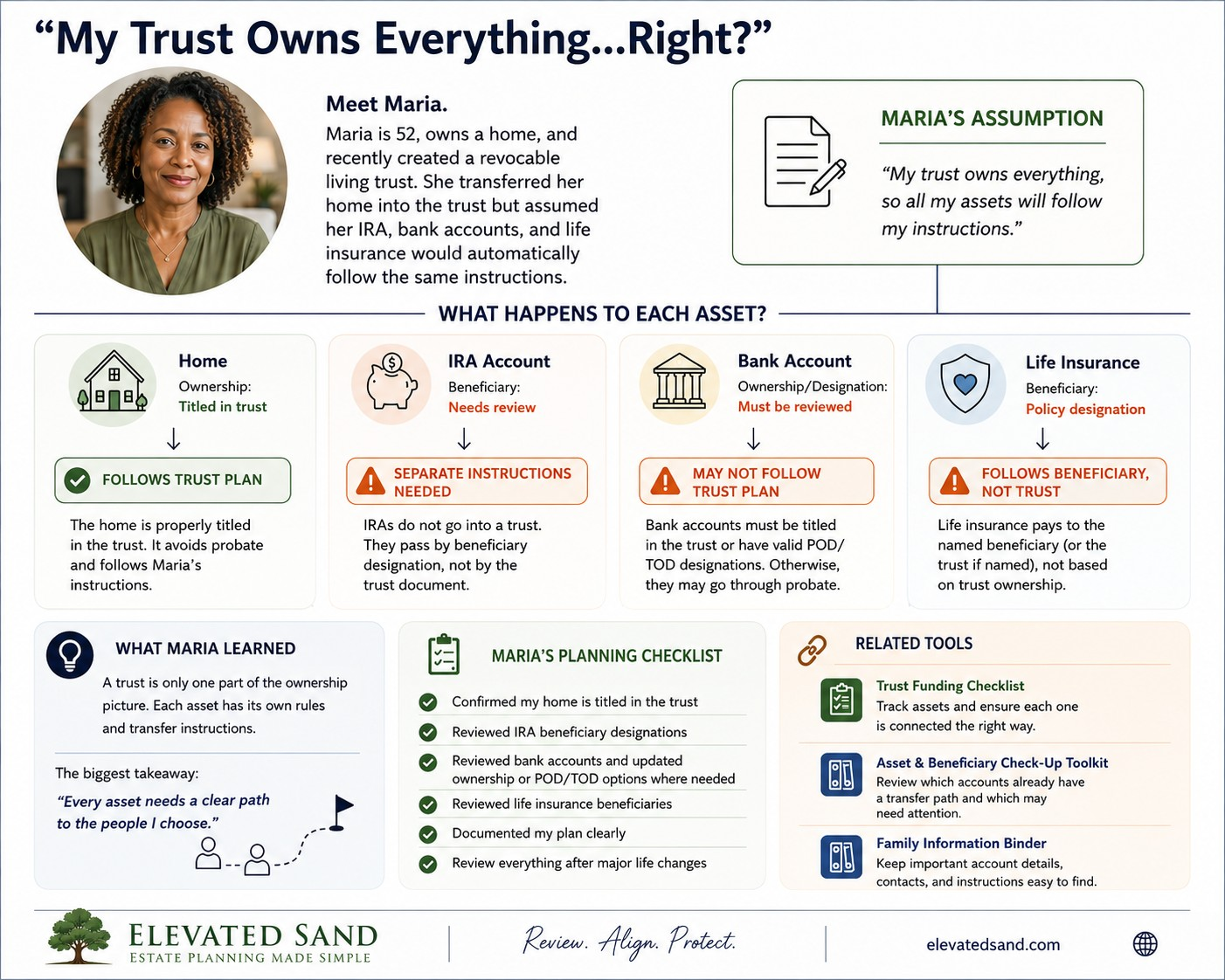
Maria created a trust and transferred her home correctly, but later assumed her IRA, bank accounts, and life insurance automatically followed the same instructions. Her scenario shows why each asset needs its own transfer path.
Should You Hire an Attorney?
Because deed requirements vary by state and property type, professional help is strongly recommended if:
- The property has liens or title issues
- You own rental or multi-unit property
- You have a blended family
- You own property in multiple states
- Your trust has complex distribution instructions
The cost of professional help is often far less than the cost of fixing mistakes later.
Final Takeaway
Transferring real estate into your trust does not have to be overwhelming, but it does need to be done correctly.
When handled correctly, a real estate transfer can help:
- Reduce probate complications
- Preserve privacy
- Support continuity
- Give your successor trustee clearer authority
- Carry out your instructions
Your trust is the plan. Proper transfers are what make the plan work.
UP NEXT · PHASE 2, ARTICLE 7
Life Estate vs. Living Trust — Which Is Better for Your Home?
Compare life estates and living trusts to understand how each option affects control, flexibility, probate, and the future of your home.
Resources & Related Reading
Explore trusted, expert sources or related articles for deeper guidance on the topics covered in this phase.
Trusted External Resources
These organizations provide reliable, plain-language information on trusts, estate planning, and asset protection. Content may change over time, but these hubs are regularly maintained and searchable.
🌐 NOLO — Wills, Trusts & Estate Planning Hub
🌐 Fidelity — Estate Planning & Trusts Resource Center
🌐 Charles Schwab — Estate Planning Insights
🌐 ElderLawAnswers — Estate Planning Basics
NOTE: These links are provided for additional education and exploration.
All Phase 2 Articles
Learn how trusts work, when they’re needed, how to fund them, and the key decisions that help families avoid probate and protect assets.
- What Is a Revocable Living Trust?
- Revocable vs. Irrevocable Trusts: Which Fits Your Goals?
- Choosing the Right Trustee for Your Estate Plan
- How to Fund a Revocable Living Trust
- Trust Asset Rules
- How to Transfer Property into a Trust (Without Costly Mistakes)
- Life Estate vs. Living Trust: Which Is Better for Your Home?
- Common Revocable Living Trust Mistakes to Avoid