
Common Revocable Living Trust Mistakes to Avoid
Small details that can make a big difference.
Learn the common oversights that can prevent a trust from working as intended — and how regular reviews, proper funding, and clear instructions help keep your plan aligned.
Originally Published: December 2025 • Last Updated: June 2026
At a Glance
YOU ARE HERE:
Estate Planning Series → Phase 2 Article 8 of 8
Introduction: Common Trust Mistakes
A revocable living trust can be one of the most useful tools for organizing your estate plan, reducing probate concerns, and creating clarity for the people you care about.
But creating the trust document is only the beginning.
A trust works best when it is properly funded, reviewed, and kept aligned with your life changes.
Small oversights — like forgetting to update an account, review beneficiaries, or add newly acquired assets — can create gaps between your plan and what actually happens.
This article walks through common trust mistakes families make and practical steps that help prevent them.
Mistake #1: Not Funding the Trust
This is one of the most common reasons a trust may not work as expected.
Creating a trust document alone does not automatically connect your assets to it. If assets remain titled in your individual name, they may still go through probate and may not follow your trust’s instructions.
Why This Matters
- Your successor trustee may have limited authority over certain assets
- Additional steps may be required during incapacity
- Probate may still apply to assets outside the trust
How to Avoid It
- Retitle bank and brokerage accounts
- Transfer real estate into the trust
- Review beneficiary designations
- Complete a personal property assignment
If an asset has a title, registration, or beneficiary form, it likely requires a specific funding step.
Mistake #2: Forgetting to Update Beneficiaries
Beneficiary designations often control how certain assets transfer, regardless of what your trust or will says.
If they are outdated, assets may not transfer according to your current wishes.
Accounts That Use Beneficiaries
- Retirement accounts (401(k), IRA, Roth IRA)
- Life insurance and annuities
- Some bank and investment accounts (POD/TOD)
How to Avoid It
- Review beneficiaries regularly and after major life changes
- Add contingent beneficiaries
- Ensure designations align with your trust plan
Major life events should always trigger a review.
FREE DOWNLOAD
📘 Trust Setup Mistakes Checklist
The Trust Setup Mistakes Checklist helps you review common planning gaps, confirm important details, and identify items that may need attention. View resource →
Mistake #3: Choosing a Trustee Without Considering the Responsibilities
Your trustee is responsible for managing assets, communicating with beneficiaries, and following legal requirements. A trustee who is not prepared for the role may create delays, confusion, or additional challenges.
Common Trustee Selection Errors
- Choosing someone who is disorganized or overwhelmed
- Naming co-trustees who don’t work well together
- Selecting based on obligation rather than ability
How to Avoid It
- Choose someone responsible, organized, and calm under pressure
- Consider a professional trustee if family dynamics are complex
- Talk to your trustee before naming them
Integrity and reliability matter more than financial expertise.
Mistake #4: Not Transferring Real Estate Correctly
Real estate is often the largest asset in an estate — and one of the most commonly mishandled.
Common Errors
- Failing to record the new deed
- Forgetting rental or vacation properties
- Not updating insurance after transfer
- Removing property during refinancing and forgetting to retitle it back
How to Avoid It
- Have your attorney prepare and record deeds
- Keep proof of trust ownership with your estate documents
- Confirm all properties are properly titled
Property that is not properly transferred may not receive the benefits you intended from the trust.
Mistake #5: Leaving Out Key Assets
Some assets require extra attention and are frequently overlooked.
Often Missed Assets
- Business interests
- Digital assets
- Safe deposit boxes
- Collectibles and heirlooms
- Specialty or out-of-state property
Leaving these out may create delays, confusion, or additional steps later.
How to Avoid It
- Create a complete asset inventory
- Review less obvious assets carefully
- Ask specifically about items that don’t fit neatly into accounts
Mistake #6: Conflicts Between the Will and the Trust
Your estate planning documents work best when they support the same overall plan.
Common Issues
- The will names different beneficiaries than the trust
- Guardianship instructions conflict
- Assets are left outside the trust with no clear direction
How to Avoid It
- Use a pour-over will to capture leftover assets
- Ensure both documents reflect the same intentions
- Update them together after major changes
Your documents should reinforce — not contradict — each other.
Mistake #7: Not Planning for Incapacity
Trusts are not only about what happens after death. They can also help provide structure if you become unable to manage certain responsibilities during your lifetime.
Without Proper Incapacity Planning
- Accounts may be frozen
- Loved ones may need court approval
- Guardianship or conservatorship proceedings may be required
How to Avoid It
- Fully fund your trust
- Include clear incapacity instructions
- Maintain aligned financial and medical powers of attorney
- Ensure your successor trustee understands their role
For many families, incapacity planning is one of the most important benefits of a well-designed trust.
Mistake #8: Never Reviewing or Updating the Trust
Life changes — your trust should too.
Review After:
- Marriage or divorce
- Birth or adoption
- Death of a beneficiary or trustee
- Buying or selling property
- Significant financial changes
- Moving to another state
Many professionals recommend reviewing your trust periodically, especially after major life or financial changes.
What a Well-Maintained Trust Looks Like
A strong trust-based plan is:
- Fully funded
- Regularly reviewed
- Aligned with beneficiary designations
- Managed by the right trustee
- Supported by updated companion documents
When these pieces work together, your plan functions smoothly and privately.
⚖️ Real-Life Planning Scenario
Maria created her trust and transferred her home correctly, but later realized other assets followed different rules. Her scenario shows why funding, beneficiary reviews, and regular updates are important parts of keeping a trust aligned.
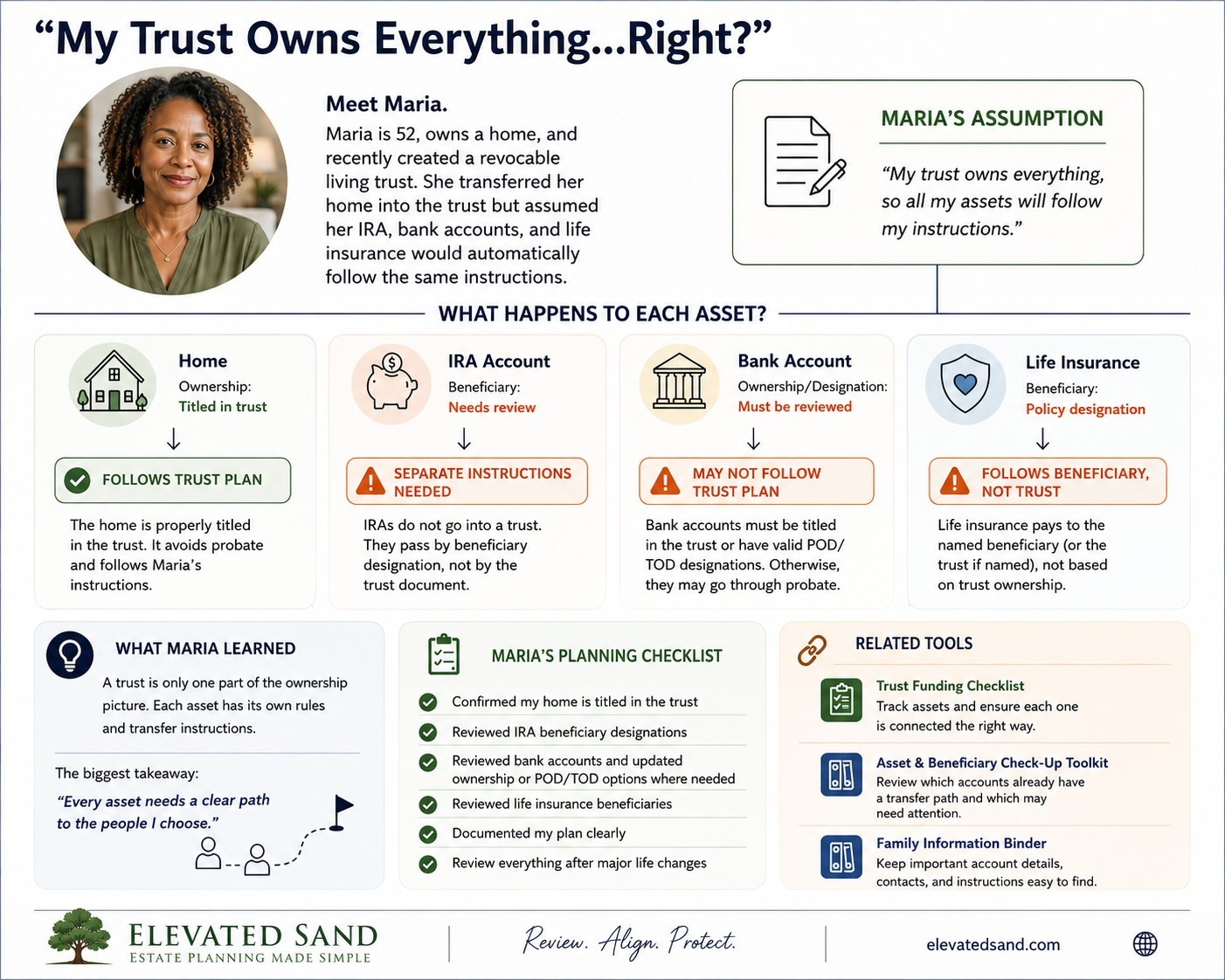
🔎 View Full Scenario → Explore more Estate Planning Scenarios
Final Takeaway
A trust is a powerful estate planning tool — but it doesn’t run on autopilot.
Avoiding common mistakes helps your trust:
- Work the way you intended
- Reduce probate complications
- Create clearer instructions
- Minimize confusion
- Support your loved ones during important transitions
A small amount of attention now can prevent significant stress later.
Phase 2 Complete – Next Up: Decision Authority & Family Protection
Phase 3 moves beyond trust planning and focuses on the people, documents, and decisions that protect you if you are ever unable to act for yourself.
🔍 External Resources & Related Articles
Explore trusted, expert sources or related articles for deeper guidance on the topics covered in this phase.
📚 Trusted External Resources
These organizations provide reliable, plain-language information on trusts, estate planning, and asset protection. Content may change over time, but these hubs are regularly maintained and searchable.
🌐 NOLO — Wills, Trusts & Estate Planning Hub
🌐 Fidelity — Estate Planning & Trusts Resource Center
🌐 Charles Schwab — Estate Planning Insights
🌐 ElderLawAnswers — Estate Planning Basics
NOTE: These links are provided for additional education and exploration.
🎯 All Phase 2 Articles
Learn how trusts work, when they’re needed, how to fund them, and the key decisions that help families avoid probate and protect assets.
📘 What Is a Revocable Living Trust (and Why Most Families Need One)
📘 Revocable vs. Irrevocable Trusts: Which One Fits Your Goals?
📘 How to Fund Your Living Trust (6 Asset Categories Explained)
📘 Common Mistakes with Trusts (And How to Avoid Them)
📘 Revocable Living Trust Asset Rules
📘 Choosing the Right Trustee
📘 How to Transfer Property into a Trust (and Avoid Costly Mistakes)
📘 Life Estate vs. Living Trust: Which Is Better for Your Home?

Looking for more estate planning tools?
Explore the full collection on our Tools & Resources page.
About the Author: Tonya Harris
Tonya Harris is the founder of Elevated Sand. She creates culturally grounded financial, digital, and real-life education that helps people understand complex systems, make informed decisions, and build stronger foundations for the future.
JOIN THE COMMUNITY
Sign up & get updates
Join our community for practical insights, financial tips, and tools to help you grow, protect, and elevate your life — one step at a time.
Disclaimer: Information is for educational purposes only and should not be considered legal or financial advice. Estate planning involves complex legal and tax considerations. You should consult a qualified estate planning attorney to determine the best approach for your situation and ensure compliance with your state’s laws.