
Knowledge Hub / Georgia Homeowners
Georgia Property Taxes: How the System Actually Works → Article 1 of 4
Georgia Property Taxes: How the System Actually Works
Understand where changes come from, how timing matters, and why location plays such a significant role.
Published January 2026 • Updated March 2026
On This Page
Introduction: Georgia Property Taxes
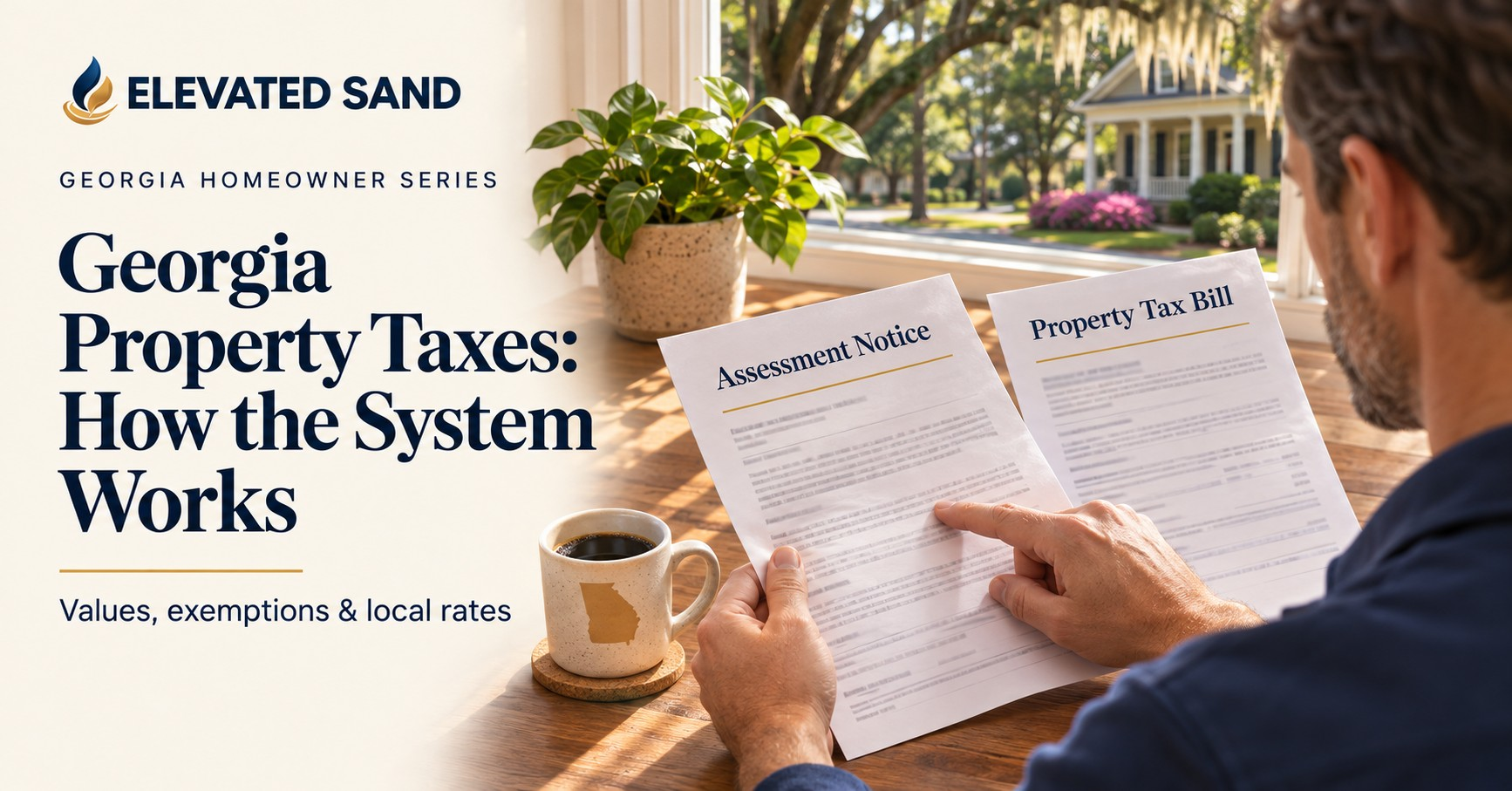
Property taxes in Georgia aren’t just a single bill you receive once a year — they’re the result of several moving parts working together over time. State law sets the framework, counties administer the process, and local funding needs influence how taxes are applied. When something changes — your bill increases, your assessment looks different, or a notice arrives unexpectedly — it can be hard to tell what’s normal and what deserves closer attention.
This article explains how Georgia property taxes work. It shows what can change your bill, when to look for notices, and why your county matters.
The three core pieces of Georgia property taxes
Every property tax bill in Georgia is shaped by three core components:
- Property value assessments
- Tax rates (millage rates)
- Exemptions and adjustments
Understanding how these pieces interact will make the rest of the series much easier to follow.
How property value is determined
In Georgia, counties are responsible for assessing property values. The goal is to estimate the fair market value of your property — what it would reasonably sell for under normal conditions.
From that market value, the county calculates an assessed value, which is generally 40% of the market value. This assessed value becomes the starting point for taxation.
It’s important to know:
- Assessments are not based on your purchase price alone
- Values may change even if you haven’t bought or sold your home
- Market shifts, neighborhood changes, and reassessment cycles all influence valuation
Later in the series, we’ll explore how to read assessment notices and when — or when not — it makes sense to question them.
Why timing matters more than most homeowners realize
Property taxes follow a predictable annual rhythm, but many homeowners only notice the system when a bill or notice arrives.
Key timing concepts include:
- Ownership and occupancy dates, which affect eligibility for exemptions
- Assessment notices, which are issued before tax bills
- Appeal windows, which are limited and strictly enforced
- Tax bill issuance, which varies by county
Missing a window doesn’t usually cause penalties — but it can limit your options for the current year. Understanding the calendar is often just as important as understanding the numbers.
The role of location: why county matters
Georgia property taxes are administered at the county level, which means:
- Exemption availability may vary
- Filing processes differ
- Timelines and notices aren’t identical statewide
Two homeowners with similar properties in different counties may have very different experiences — even under the same state laws.
Throughout this series, you’ll see guidance on how to find county-specific information, including suggested search terms and official offices to reference, so you can move from general understanding to local action when needed.
Where homestead exemptions fit into the system
Homestead exemptions are one of the most talked-about aspects of Georgia property taxes — but they are one part of a larger system, not a standalone solution.
Exemptions:
- Reduce the taxable portion of assessed value
- Depend on eligibility, filing deadlines, and continued qualification
- Do not automatically apply in all situations
The next article focuses specifically on how homestead exemptions work, including eligibility rules, filing windows, and common mistakes homeowners make.
What this article sets you up to do next
By understanding how Georgia property taxes function at a system level, you’re better prepared to:
- Read assessment notices without confusion
- Recognize which changes are routine versus unusual
- Ask better questions when something doesn’t look right
- Navigate county resources with confidence
UP NEXT
Next up: Georgia homestead exemptions — eligibility, filing, and common mistakes
What Homeowners Need to Know
The next article dives into homestead exemptions in detail, explaining how they fit into the property tax system you’ve just learned and how to determine whether — and how — they apply to your situation.
All Articles in This Series
STAY CONNECTED
Keep learning. Keep moving forward.
Practical insights and resources from Elevated Sand.
About the Author
Tonya Harris is the founder of Elevated Sand. She creates culturally grounded financial, digital, and real-life education that helps people understand complex systems, make informed decisions, and build stronger foundations for the future.
Disclaimer: Information provided in the Homeowner Financial Stability series is for educational purposes only and should not be considered legal, tax, financial, or appraisal advice. Property tax rules, exemptions, assessments, and appeal processes vary by location and individual circumstances. Homeowners should consult their local county tax assessor’s office, a qualified tax professional, or other appropriate professionals to understand how these topics apply to their specific situation and to ensure compliance with applicable laws and deadlines.